Skateboarding techniques form the foundation of every rider’s progression, whether they’re just stepping on a board or preparing for their first kickflip. Learning proper technique separates casual riders from skilled skaters who can navigate parks, streets, and ramps with confidence.
This guide breaks down essential skateboarding techniques into clear, actionable steps. Readers will learn foundational basics, pop tricks like the ollie, grinding and sliding moves, and transitional skills for ramps. Each section builds on the last, creating a logical path from beginner to intermediate skating. Safety tips round out the article to help skaters progress without unnecessary injuries.
Table of Contents
ToggleKey Takeaways
- Master foundational skateboarding techniques like stance, pushing, and turning before attempting tricks.
- The ollie is the gateway skateboarding technique—combine a strong tail pop, front foot slide, and knee lift in one fluid motion.
- Start grinds with the 50-50 (both trucks on the obstacle) and slides with the boardslide to build confidence on rails and ledges.
- For transition skating, commit fully when dropping in and use pumping to generate speed without pushing.
- Wear protective gear and learn to roll out of falls to minimize injuries while progressing.
- Film your practice sessions in slow motion to identify timing issues and improve your skateboarding techniques faster.
Foundational Skateboarding Basics
Every skater needs solid fundamentals before attempting advanced skateboarding techniques. These basics determine balance, board control, and overall comfort while riding.
Stance and Foot Position
Skaters fall into two stance categories: regular (left foot forward) and goofy (right foot forward). Neither stance is better than the other. The dominant foot typically pushes while the front foot steers. New skaters should experiment with both stances to find what feels natural.
Foot placement matters significantly. The front foot sits near the front truck bolts at a slight angle. The back foot rests on or near the tail. This position provides stability and sets up proper weight distribution for all skateboarding techniques.
Pushing and Balancing
Pushing generates speed and teaches balance simultaneously. The front foot stays planted on the board while the back foot pushes against the ground. Smooth, controlled pushes work better than frantic kicking. Once moving, the back foot returns to the tail.
Balance improves through repetition. Skaters should practice riding in a straight line, making gentle turns, and stopping before moving to tricks. Grass or carpet provides a safe surface for practicing stance without rolling.
Turning and Carving
Turns happen through weight shifts. Leaning toward the toes initiates a toeside turn. Leaning toward the heels creates a heelside turn. Loose trucks allow sharper turns but reduce stability. Tighter trucks offer more control for beginners learning skateboarding techniques.
Carving involves linking turns in a flowing motion. This skill transfers directly to bowl and ramp skating later. Skaters who master carving develop better body awareness and board control.
Mastering the Ollie and Pop Tricks
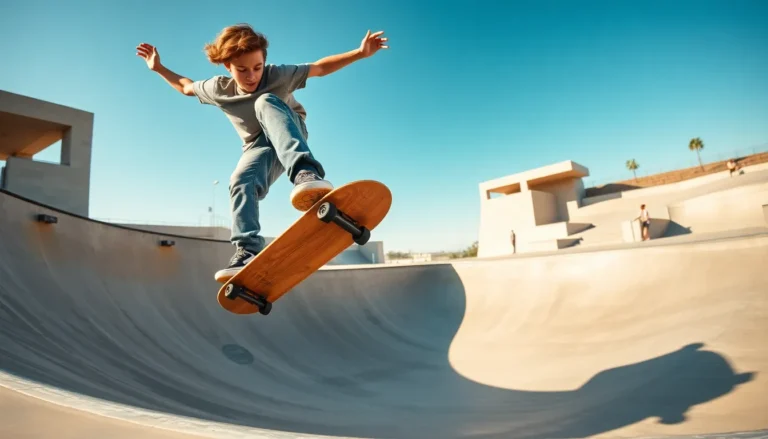
The ollie serves as the gateway to almost every skateboarding technique involving air. Without a solid ollie, tricks like kickflips, heelflips, and pop shuvits remain out of reach.
Breaking Down the Ollie
An ollie combines three movements into one fluid motion:
- The pop: The back foot snaps the tail against the ground.
- The slide: The front foot slides upward toward the nose, leveling the board.
- The jump: Both knees lift to allow the board to rise.
Timing separates good ollies from failed attempts. The pop happens first, followed immediately by the slide and jump. Many beginners pop too weakly or forget to slide their front foot. Video analysis helps skaters identify specific problems in their technique.
Common Ollie Mistakes
Skaters often jump before popping, which eliminates the snap needed for height. Others slide their foot too late, causing the board to rocket forward without leveling. Practicing stationary ollies on grass eliminates the fear of rolling and lets skaters focus purely on the movement.
Shoulder position affects ollie direction. Shoulders should stay parallel to the board throughout the trick. Twisting the shoulders causes the board to rotate unintentionally.
Building Toward Pop Tricks
Once the ollie feels consistent, skaters can explore pop shuvits and kickflips. The pop shuvit adds a 180-degree board rotation to the ollie motion. The back foot scoops backward while popping, spinning the board beneath the skater.
Kickflips require the front foot to flick off the side of the nose during the slide motion. This skateboarding technique demands precise foot placement and thousands of repetitions to master. Patience matters here, most skaters spend months learning their first kickflip.
Grinding and Sliding Techniques
Grinds and slides add style and variety to street skating. These skateboarding techniques involve riding along edges, rails, and ledges using either the trucks or the deck itself.
Understanding Grinds vs. Slides
Grinds use the metal trucks to move along an obstacle. The 50-50 grind, where both trucks ride the obstacle, represents the most fundamental grind. Slides use the wooden deck, the boardslide, for example, places the middle of the board across a rail or ledge.
Wax reduces friction on concrete and metal surfaces. Most skaters carry wax to prepare obstacles before attempting grinds or slides. Without wax, the board sticks and throws the skater forward.
Essential Grinds to Learn
50-50 grind: Both trucks lock onto the obstacle. Skaters ollie onto the object, land with trucks centered, and ride until the end. Balance and speed control determine success.
5-0 grind: Only the back truck grinds while the nose stays lifted. This skateboarding technique requires more balance than the 50-50 and teaches weight distribution skills.
Nosegrind: The opposite of the 5-0, only the front truck grinds. Nosegrinds feel awkward initially because they place weight in an unfamiliar position.
Basic Slides
Boardslide: The skater ollies and turns 90 degrees, landing with the board perpendicular to the obstacle. The deck slides along the surface. Committing fully prevents the board from catching and causing falls.
Noseslide and tailslide: These variations slide on either the nose or tail portion of the deck. They require precise pop and body positioning to lock into properly.
Transitional and Ramp Skills
Transition skating involves riding curved surfaces like quarter pipes, half pipes, and bowls. These skateboarding techniques differ significantly from street skating and require specific skills.
Dropping In
Dropping in means entering a ramp from the top platform. The skater places the tail on the coping (the metal edge), positions their front foot over the bolts, and leans forward decisively. Hesitation causes the board to shoot out from under the skater.
This move intimidates beginners more than almost any other skateboarding technique. Starting on smaller ramps (3-4 feet) builds confidence before progressing to larger transitions. The motion itself is simple, the commitment is hard.
Pumping for Speed
Pumping generates speed without pushing. Skaters compress their body at the bottom of transitions and extend at the top. This motion mimics a swing set and transfers energy into forward momentum.
Efficient pumping allows skaters to maintain speed through entire bowl runs. The technique also builds leg strength and teaches body awareness on curved surfaces.
Basic Lip Tricks
Lip tricks happen at the top edge of ramps. The rock to fakie places the front trucks over the coping, then returns to fakie (riding backward). This skateboarding technique teaches coping awareness and weight shifting.
Axle stalls involve stopping with both trucks on the coping. The skater pumps up, turns 90 degrees, stalls momentarily, then drops back in. More advanced lip tricks like rock and rolls, disasters, and blunts build from these foundational moves.
Tips for Progressing Safely
Skateboarding carries inherent risks. Smart progression minimizes injuries while maximizing skill development.
Protective Gear Matters
Helmets prevent serious head injuries. Wrist guards protect the most commonly injured body part in skateboarding. Knee pads and elbow pads allow skaters to practice skateboarding techniques more aggressively without fear.
Professional skaters wear pads during practice sessions, especially when learning new tricks. The stigma against protective gear has faded significantly in recent years.
Learning to Fall
Falls happen constantly in skateboarding. Rolling out of falls distributes impact across the body instead of concentrating it on wrists or joints. Skaters should practice rolling on grass before attempting it during actual falls.
Running out of tricks, stepping off the board and running, works better than trying to save a lost cause. Knowing when to bail prevents many injuries.
Progressive Skill Building
Skaters should master each skateboarding technique before moving to harder variations. Rushing progression leads to bad habits and frustration. A solid ollie takes months to develop properly.
Filming attempts provides valuable feedback. Slow-motion video reveals timing issues invisible during real-time practice. Many skaters improve dramatically after watching their own footage.