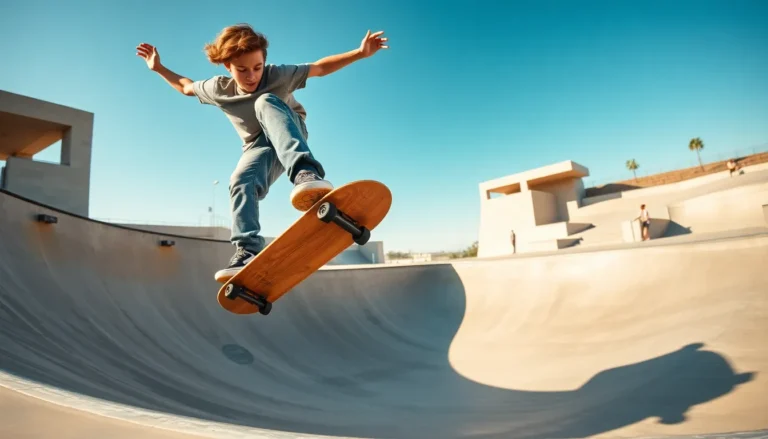
Learning how to skateboarding starts with the right knowledge and a willingness to fall, then get back up. Skateboarding attracts millions of people worldwide because it combines athleticism, creativity, and freedom in a single activity. Beginners often feel overwhelmed by the learning curve, but every professional skater once struggled to push in a straight line. This guide breaks down everything new skaters need to know, from selecting their first board to mastering basic techniques. Whether someone wants to cruise around the neighborhood or eventually learn tricks, the fundamentals remain the same.
Table of Contents
ToggleKey Takeaways
- Learning how to skateboarding starts with choosing the right deck width (7.75–8.5 inches) based on your foot size for optimal stability.
- Always wear certified safety gear—including a helmet, wrist guards, and knee pads—to prevent injuries and build confidence.
- Determine your natural stance (regular or goofy) by noticing which foot you step forward with when pushed from behind.
- Master pushing and stopping on flat ground before attempting turns, keeping your knees bent and weight centered over the board.
- Practice consistently in short daily sessions rather than occasional long ones to build muscle memory and balance faster.
- Falling is inevitable when learning how to skateboarding, so practice rolling with impacts instead of catching yourself with stiff arms.
Choosing Your First Skateboard
The first step in learning how to skateboarding involves picking the right board. Complete skateboards work best for beginners because they come pre-assembled and ready to ride. These typically cost between $60 and $150, depending on quality.
Deck width matters most for new skaters. Boards range from 7.5 to 8.5 inches wide. Riders with smaller feet (shoe size 8 or below) should start with a 7.75 to 8-inch deck. Those with larger feet benefit from 8.25 to 8.5-inch widths. A wider deck provides more stability, which helps during the learning phase.
Trucks connect the wheels to the deck and control turning. They should match the deck width closely. Beginners should avoid extremely loose or tight trucks, medium tightness offers the best balance of stability and maneuverability.
Wheel hardness affects the ride quality. Softer wheels (78A-87A) roll smoothly over rough surfaces and absorb vibrations. Harder wheels (99A-101A) work better for tricks on smooth surfaces. New skaters learning how to skateboarding on streets or sidewalks should choose softer or medium-hardness wheels around 90A-95A.
Essential Safety Gear You Need
Protective gear prevents injuries and builds confidence. A certified helmet tops the list of necessary equipment. Look for helmets with CPSC or ASTM certification, which indicates they meet safety standards for skateboarding impacts.
Wrist guards protect against the most common skateboarding injury. When beginners fall, they instinctively catch themselves with their hands. Wrist guards absorb impact and prevent fractures or sprains.
Knee pads and elbow pads round out the essential protection. Hard-shell pads offer the most protection, while soft pads provide better flexibility. Many skaters learning how to skateboarding prefer hard-shell knee pads because knees hit the ground frequently.
Proper footwear also matters. Flat-soled shoes with good grip, like those from skate-specific brands, provide better board feel than running shoes or sneakers with thick, curved soles. Canvas or suede uppers hold up better against grip tape abrasion.
Finding Your Stance and Balance
Before learning how to skateboarding in motion, new skaters must determine their natural stance. Two options exist: regular (left foot forward) and goofy (right foot forward). Neither stance is better, it depends on individual preference.
A simple test helps identify natural stance. Have someone gently push the beginner from behind. The foot they step forward with to catch their balance typically becomes their front foot on the board.
Once stance is determined, practice standing on the board on a flat surface. Grass or carpet prevents the board from rolling while beginners find their balance point. Feet should sit roughly over the truck bolts, shoulder-width apart.
Bend the knees slightly and keep weight centered over the board. Stiff, straight legs make balancing harder and increase fall risk. Practice shifting weight from toe-side to heel-side edges while stationary. This movement forms the foundation for turning once the board starts moving.
Basic Skateboarding Techniques to Master
After building static balance, new skaters can begin moving. Two fundamental skills make all other skateboarding possible: pushing and turning.
Pushing and Stopping
Pushing propels the skateboard forward. The front foot stays on the board near the front bolts, angled slightly toward the nose. The back foot pushes against the ground in smooth, controlled strokes.
Beginners learning how to skateboarding should start with small pushes on flat ground. After each push, place the back foot on the tail of the board. Keep knees bent and arms relaxed for balance.
Stopping requires practice. The foot-drag method works best for beginners, simply lower the back foot to the ground and drag the sole gently. Avoid putting full weight on the dragging foot, which causes stumbles. As skills progress, skaters can learn the tail-stop, where pressing down on the tail creates friction with the ground.
Turning and Carving
Turning happens through weight shifts. Lean toward the toes to turn one direction, and lean toward the heels to turn the other. The direction depends on stance, regular riders turn left by leaning on their toes.
Start with gentle leans to produce wide, gradual turns. Sharp turns require more lean and higher speeds, so beginners should practice wide arcs first. Carving connects multiple turns in an S-pattern, which helps control speed on slight downhills.
Looking in the turn direction helps the body follow naturally. Many beginners stare at their feet, which restricts balance and turning ability. Keep eyes focused ahead on the intended path.
Tips for Practicing Safely and Building Skills
Consistent practice builds skateboarding ability faster than occasional long sessions. Thirty minutes daily beats three hours once a week. Muscles and balance systems adapt better to regular, repeated practice.
Choose practice locations carefully. Empty parking lots, tennis courts, and skate parks during off-peak hours offer smooth surfaces without traffic. Avoid hills until pushing, stopping, and turning feel comfortable.
Falling is part of learning how to skateboarding. Practice falling safely by rolling with the impact rather than catching with stiff arms. Tuck and roll techniques reduce injury severity. Wearing protective gear allows beginners to fall without serious consequences.
Set small, achievable goals for each session. First session: stand on the board comfortably. Second session: push three times in a row. Third session: make a gentle turn. This progression builds skills systematically and maintains motivation.
Watch other skaters at parks or in videos to learn form and technique. Many experienced skaters happily offer tips to beginners. The skateboarding community generally welcomes new members who show respect for the sport and other riders.