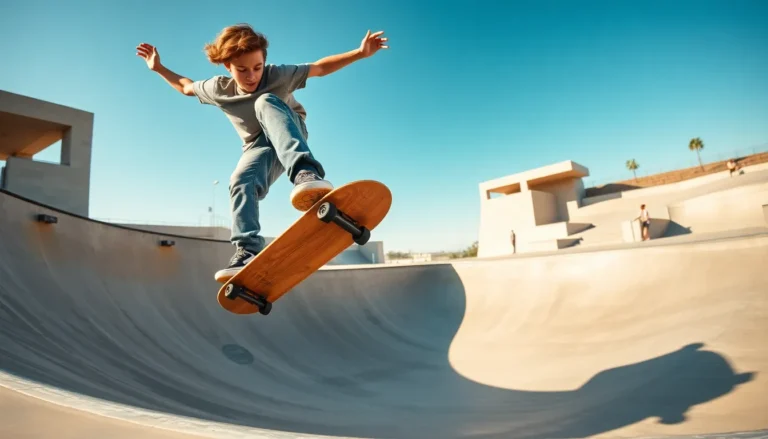
This skateboarding guide covers everything a beginner needs to start riding with confidence. Skateboarding offers a unique blend of exercise, creativity, and community. Millions of people worldwide enjoy it as both a sport and a form of self-expression.
Getting started can feel overwhelming. Which board should a beginner buy? What safety gear matters most? How do riders learn their first tricks without getting hurt? This guide answers those questions directly. It breaks down board selection, essential gear, fundamental techniques, and common pitfalls that trip up new skaters. By the end, readers will have a clear path from curious observer to confident rider.
Table of Contents
ToggleKey Takeaways
- This skateboarding guide recommends beginners start with a complete board ($80-$150) from a reputable skate shop rather than cheap big-box options.
- Choose a wider deck (8.0-8.5 inches) for more stability when learning, and match the width to your shoe size.
- Always wear a certified helmet meeting CPSC or ASTM F1492 standards, plus knee pads and wrist guards to prevent common injuries.
- Master the fundamentals—pushing, balancing, stopping, and turning—before attempting any tricks to build a solid foundation.
- Practice on smooth, flat surfaces like empty parking lots or tennis courts, and avoid rough pavement that can cause sudden stops.
- Connect with local skate parks or online communities to learn faster and get encouragement from experienced riders.
Choosing Your First Skateboard
The right skateboard makes learning easier and more enjoyable. Beginners should understand the main components before making a purchase.
Complete vs. Custom Builds
A complete skateboard comes pre-assembled and ready to ride. This option works best for beginners because it saves time and eliminates guesswork. Most skate shops sell quality completes in the $80-$150 range. Custom builds allow experienced skaters to pick specific trucks, wheels, and bearings, but that level of customization isn’t necessary when someone is just starting out.
Deck Size Matters
Skateboard decks typically range from 7.5 to 8.5 inches wide. Narrower decks (7.5-7.75 inches) feel lighter and flip more easily. Wider decks (8.0-8.5 inches) provide more stability for beginners. A good rule: match the deck width to shoe size. Someone wearing size 9 or larger should consider an 8.0-inch deck or wider.
Trucks, Wheels, and Bearings
Trucks connect the wheels to the deck and control turning. They should match the deck width closely. Wheels come in different hardness levels, measured by durometer. Softer wheels (78A-87A) roll smoothly over rough surfaces. Harder wheels (99A-101A) work better for tricks on smooth pavement. Bearings rated ABEC-5 or ABEC-7 provide enough speed and durability for most beginners.
Skip the cheapest boards at big-box retailers. They often use plastic trucks and low-quality bearings that make learning frustrating. Invest in a proper skateboard from a reputable skate shop or brand.
Essential Gear and Safety Equipment
Skateboarding carries injury risk. The right protective gear reduces that risk significantly, especially for those still developing balance and board control.
Helmets Save Lives
A certified skateboard helmet is non-negotiable. Look for helmets meeting CPSC or ASTM F1492 safety standards. These certifications mean the helmet has passed impact tests. Dual-certified helmets protect against both single and multiple impacts. The helmet should fit snugly without wobbling. Replace any helmet after a significant impact.
Pads and Wrist Guards
Knee pads protect against the most common skateboarding injury. When beginners fall, they instinctively drop to their knees. Quality knee pads feature hard plastic caps over foam padding. Elbow pads follow similar construction. Wrist guards prevent sprains and fractures from catching falls with outstretched hands.
Many new skaters skip pads because they feel bulky or look uncool. This is a mistake. Professional skaters wear full protective gear when learning new tricks. Beginners should do the same.
Footwear Choices
Flat-soled shoes with good grip work best for skateboarding. Skate-specific shoes from brands like Vans, Nike SB, or Etnies feature reinforced areas that resist wear from grip tape. Avoid running shoes, sandals, or anything with thick soles. Thin, flat soles help riders feel the board beneath their feet.
Basic Skateboarding Techniques to Master
Every skilled skater started with fundamentals. These basic techniques form the foundation for everything that comes later.
Finding Your Stance
Skaters ride either regular (left foot forward) or goofy (right foot forward). Neither stance is better, it’s about personal comfort. A simple test: have someone gently push from behind. Whichever foot steps forward naturally is likely the front foot. Most people ride regular, but roughly 40% ride goofy.
Pushing and Balancing
Beginners should practice standing on the board first. Place the front foot over the front bolts, angled slightly toward the nose. The back foot stays on the ground for pushing. Push with smooth, controlled motions, not frantic kicks. After each push, place the back foot on the tail and reposition the front foot perpendicular to the board.
Balance improves quickly with practice. Start on flat, smooth surfaces like empty parking lots or tennis courts. Avoid hills and crowded areas until basic balance feels natural.
Stopping Safely
The foot brake is the simplest stopping method. Drag the sole of the pushing foot along the ground until the board slows. This wears out shoes faster but provides reliable control. Beginners should master this before attempting tail drags or power slides.
Turning Basics
Leaning controls direction. Lean toward the toes to turn one way: lean toward the heels to turn the other. Start with gentle, wide turns. As confidence grows, adjust truck tightness to allow sharper carves. Looser trucks turn more easily but feel less stable.
Common Mistakes and How to Avoid Them
New skaters often repeat the same errors. Recognizing these patterns helps beginners progress faster.
Looking Down at the Feet
Beginners instinctively stare at their feet. This throws off balance and limits awareness of obstacles ahead. Instead, look forward at the destination. The feet will learn proper placement through repetition. Trust the process.
Practicing on Poor Surfaces
Rough pavement, gravel, and cracked sidewalks make learning much harder. Small rocks can stop wheels instantly, sending riders flying forward. Smooth concrete or asphalt works best. Skate parks offer ideal learning surfaces once basic riding feels comfortable.
Skipping Fundamentals
Many beginners want to learn kickflips immediately. This approach leads to frustration and injury. The skateboarding guide principle here is simple: master pushing, turning, and stopping before attempting tricks. A solid foundation makes tricks easier to learn later.
Riding Alone Too Often
Skateboarding with others accelerates learning. Experienced skaters offer tips, demonstrate techniques, and provide encouragement. Local skate parks and online communities connect beginners with more experienced riders. Don’t be afraid to ask for help, most skaters remember being beginners themselves.