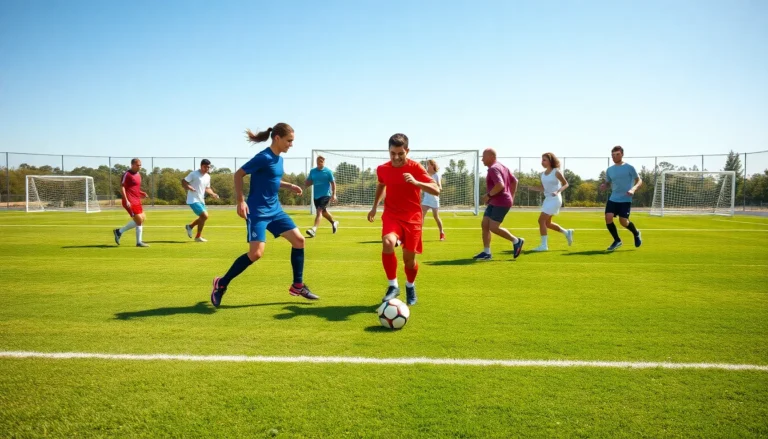
Soccer examples help players, coaches, and fans understand the game at a deeper level. Whether someone is learning basic dribbling techniques or studying how elite teams execute set pieces, concrete examples make abstract concepts click. This guide breaks down essential soccer skills, formations, famous plays, and real-world strategies. Each section provides clear illustrations that readers can apply to their own understanding of the sport. From youth players to seasoned enthusiasts, these soccer examples offer practical insights into what makes the beautiful game tick.
Table of Contents
ToggleKey Takeaways
- Soccer examples like step-overs, tiki-taka passing, and set piece routines help players and coaches understand fundamental skills at a practical level.
- Core skills every player must develop include dribbling, passing, shooting, heading, and tackling—each with specific techniques used by elite professionals.
- Common formations like 4-4-2, 4-3-3, 3-5-2, and 4-2-3-1 each create unique tactical advantages depending on a team’s style and player strengths.
- Set pieces account for roughly 30% of professional goals, making corner kicks, free kicks, and even throw-ins critical soccer examples to study.
- Real-world strategies such as pressing, counter-attacking, possession play, and wing play show how top teams turn tactical concepts into match-winning moments.
Common Soccer Skills Every Player Should Know
Every soccer player needs a foundation of core skills. These abilities separate casual players from effective ones on the pitch.
Dribbling
Dribbling involves moving the ball while maintaining control. A classic soccer example is the step-over, a player fakes a kick in one direction, then pushes the ball the opposite way. Lionel Messi uses close dribbling to weave through defenders. His low center of gravity and quick touches demonstrate elite ball control.
Passing
Accurate passing keeps possession and creates scoring chances. The push pass uses the inside of the foot for short, precise deliveries. Long balls require the instep and more power. Barcelona’s tiki-taka style showcases passing at its finest, short, rapid exchanges that pull defenders out of position.
Shooting
Scoring goals requires different shooting techniques. The instep drive delivers power for long-range efforts. The side-foot shot offers accuracy in the box. Players like Cristiano Ronaldo combine both, adjusting their technique based on distance and angle.
Heading
Heading the ball matters for both offensive and defensive plays. Attackers direct headers toward goal from crosses. Defenders clear dangerous balls from the box. Timing the jump and meeting the ball with the forehead, not the top of the head, produces better results.
Tackling
Defenders use tackling to win the ball back. The block tackle meets the ball head-on with a planted foot. The slide tackle covers more ground but carries yellow card risk if mistimed. N’Golo Kanté built his reputation on clean, well-timed tackles that start counterattacks.
Examples of Basic Soccer Formations
Soccer formations dictate how teams position players across the pitch. Each formation creates different strengths and weaknesses.
4-4-2
The 4-4-2 formation remains a classic soccer example of balanced play. Four defenders provide a solid back line. Four midfielders cover width and central areas. Two strikers offer attacking options. This setup works well for teams that prefer direct, straightforward tactics.
4-3-3
The 4-3-3 formation emphasizes attack with three forwards. Wide wingers stretch opposing defenses. A central striker acts as the focal point. Three midfielders must work harder to cover ground, but the formation creates more scoring opportunities. Liverpool under Jürgen Klopp used this system with devastating effect.
3-5-2
The 3-5-2 formation uses three center-backs and wing-backs who cover the entire flank. Five midfielders control the middle of the pitch. Two strikers provide the attacking threat. This soccer example suits teams with athletic wing-backs who can attack and defend.
4-2-3-1
The 4-2-3-1 formation has become popular in modern soccer. Two defensive midfielders protect the back four. Three attacking midfielders support a lone striker. This setup offers defensive security while maintaining creativity. Real Madrid has employed this formation during multiple Champions League campaigns.
Famous Soccer Plays and Set Pieces
Set pieces account for roughly 30% of goals in professional soccer. These planned plays turn dead-ball situations into scoring chances.
Corner Kicks
Corner kicks offer prime goal-scoring opportunities. Teams design specific routines for these moments. One soccer example involves a near-post flick, a player meets the ball at the front post and redirects it across goal. Another option is the back-post delivery, where tall players attack the far side of the box.
Free Kicks
Direct free kicks near the box threaten goalkeepers. David Beckham’s curling technique became legendary, he struck the ball with the inside of his foot to generate spin. Juninho Pernambucano mastered the knuckleball, hitting the valve to create unpredictable movement.
Penalty Kicks
Penalty kicks seem simple but involve psychology. Some takers pick a spot and commit. Others wait for the goalkeeper to move. The Panenka, a soft chip down the middle, requires nerve. Antonín Panenka invented this in the 1976 European Championship final.
Throw-Ins
Long throw-ins function like corner kicks. Rory Delap’s throws for Stoke City created chaos in Premier League penalty areas. Teams now employ throw-in coaches to maximize these often-overlooked soccer examples.
Quick Free Kicks
Smart teams catch opponents napping with quick free kicks. Instead of setting up an elaborate routine, the taker plays a fast pass before defenders organize. This soccer example requires awareness and communication between teammates.
Real-World Examples of Soccer Strategies in Action
Watching professional teams reveals how strategies play out in actual matches.
Pressing
High pressing forces opponents into mistakes near their own goal. Jürgen Klopp’s “gegenpressing” at Liverpool provides a clear soccer example. Players immediately swarm the ball after losing possession. This strategy exhausts opponents and creates turnovers in dangerous areas.
Counter-Attacking
Counter-attacking suits teams facing stronger opponents. The 2012 Chelsea Champions League run demonstrated this approach. They absorbed pressure, then released quick forwards like Didier Drogba on the break. Speed and clinical finishing make counter-attacks lethal.
Possession Play
Pep Guardiola’s teams prioritize possession. Manchester City often controls 65% or more of the ball. Short passes tire opponents who chase the ball. Eventually, gaps appear in the defense. This patient soccer example requires technical excellence from every player.
Parking the Bus
Defensive teams sometimes “park the bus”, placing ten players behind the ball. José Mourinho’s Inter Milan used this in their 2010 Champions League semifinal against Barcelona. They defended for long stretches, then struck on rare chances. It’s not pretty, but it wins matches.
Wing Play
Exploiting the flanks stretches defenses horizontally. Traditional wingers hug the touchline and deliver crosses. Modern inverted wingers cut inside to shoot. Both approaches create soccer examples of width opening central spaces.