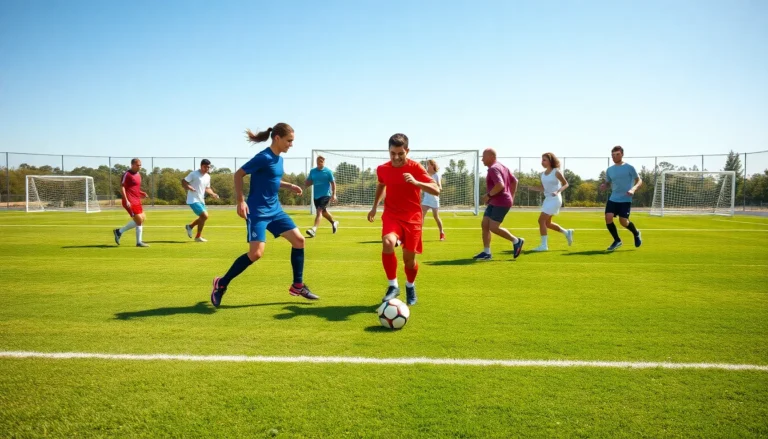
Soccer for beginners starts with one simple truth: this is the world’s most popular sport for a reason. Over 4 billion people follow the game globally, and millions play it every week. The barrier to entry? Remarkably low. You need a ball, some open space, and a basic understanding of the rules.
Whether someone wants to join a recreational league, play pickup games with friends, or simply understand what’s happening on TV, this guide covers the essentials. From rules and equipment to core skills and practice tips, beginners will find everything they need to start playing with confidence.
Table of Contents
ToggleKey Takeaways
- Soccer for beginners requires minimal equipment—just cleats, shin guards, a properly sized ball, and comfortable athletic clothing to get started.
- Master the five fundamental skills: dribbling, passing, shooting, receiving, and heading to build a solid foundation for your game.
- Understanding the offside rule and basic fouls helps beginners follow matches and avoid penalties during play.
- Practice with both feet to become less predictable and create more options on the field.
- Small-sided games (3v3 to 5v5) accelerate skill development by giving players more touches on the ball than full matches.
- Consistency beats intensity—short, daily practice sessions build muscle memory faster than occasional long training days.
Understanding the Basic Rules of Soccer
Soccer for beginners becomes much easier once the core rules click into place. The game pits two teams of eleven players against each other on a rectangular field. Each team tries to kick the ball into the opponent’s goal. The team with more goals at the end of the match wins.
Matches consist of two 45-minute halves with a 15-minute break between them. A referee controls the game and enforces the rules. Two assistant referees help watch for offsides and out-of-bounds plays along the sidelines.
The Offside Rule
The offside rule confuses many newcomers, but it’s straightforward once broken down. A player is offside if they’re closer to the opponent’s goal than both the ball and the second-to-last defender when a teammate passes to them. The rule prevents players from simply waiting near the goal for easy scoring chances.
Fouls and Free Kicks
Players cannot push, trip, kick, or hold opponents. These actions result in fouls. The opposing team receives a free kick from the spot of the foul. More serious fouls inside the penalty area give the attacking team a penalty kick from 12 yards out, a nearly guaranteed scoring opportunity.
Yellow cards serve as warnings for reckless play. Two yellow cards equal a red card, which removes the player from the game. A direct red card can be issued for violent conduct or denying an obvious goal-scoring opportunity.
Throw-ins, Corner Kicks, and Goal Kicks
When the ball crosses the sideline, the team that didn’t touch it last takes a throw-in. Both feet must stay on the ground, and the ball must be thrown from behind and over the head.
If the defending team kicks the ball over their own goal line, the attackers get a corner kick from the corner flag. If the attacking team kicks it out, the goalkeeper takes a goal kick from the six-yard box.
Essential Equipment You Need to Play
Soccer for beginners requires minimal gear compared to other sports. This accessibility helps explain the game’s worldwide popularity. Here’s what players actually need.
Cleats
Soccer cleats provide traction on grass and turf surfaces. Beginners should look for firm ground (FG) cleats, which work on most natural grass fields. Turf shoes have smaller rubber studs and work better on artificial surfaces. Running shoes can work for casual play, but they don’t offer the same grip or ball control.
Fit matters more than brand. Cleats should feel snug without pinching. Most players size down slightly from their regular shoe size.
Shin Guards
Shin guards protect the lower leg from kicks and collisions. Most leagues require them. Slip-in guards slide under socks and offer flexibility. Guards with ankle protection provide more coverage but limit mobility. Beginners often prefer the slip-in style for comfort.
The Ball
Soccer balls come in different sizes based on age group:
- Size 3: Ages 8 and under
- Size 4: Ages 8 to 12
- Size 5: Ages 13 and up (official match size)
Adults and teenagers use size 5 balls. A properly inflated ball should have some give when pressed but bounce back quickly.
Clothing
Players wear shorts, a jersey or t-shirt, and soccer socks that cover the shin guards. Athletic clothing that allows free movement works fine for practice. League play typically requires matching team uniforms.
Goalkeepers need gloves with padding to catch and deflect shots. They also wear different colored jerseys to distinguish themselves from field players and referees.
Fundamental Skills Every Beginner Should Learn
Soccer for beginners builds on a handful of core skills. Master these, and the game opens up.
Dribbling
Dribbling means moving the ball while keeping it close. Players use small touches with the inside, outside, and sole of the foot. Good dribblers keep their heads up to see teammates and defenders. They don’t look down at the ball constantly.
Practice tip: Set up cones in a line and weave through them at increasing speeds. Use both feet equally.
Passing
Passing connects teammates and moves the ball faster than any player can run. The inside of the foot provides the most accurate passes for short distances. Plant the non-kicking foot next to the ball and strike through the center with a locked ankle.
Longer passes use the instep (the laces area) and require more follow-through. Weight matters, too soft and the ball won’t reach the target: too hard and the receiver can’t control it.
Shooting
Shooting turns chances into goals. Players strike the ball with their laces for power, keeping the knee over the ball and following through toward the target. Placement often beats power. A well-placed shot to the corner gives goalkeepers less time to react than a rocket down the middle.
Receiving and First Touch
A good first touch sets up the next action. Players cushion the ball with their foot, thigh, or chest to bring it under control. The touch should move the ball into space away from defenders.
Bad first touches give the ball away. Great players make receiving look effortless because they’ve practiced thousands of times.
Heading
Heading uses the forehead to redirect the ball. Players attack the ball rather than letting it hit them. Eyes stay open, and the neck muscles stay firm. Beginners should start with softer, lighter balls to build confidence before heading regulation balls at full speed.
Tips for Improving Your Game Quickly
Soccer for beginners improves fastest with deliberate practice and smart habits.
Practice with Both Feet
Most players favor one foot heavily. This makes them predictable. Defenders know which way a one-footed player will turn. Spending extra time on the weaker foot creates balance and opens up more options on the field.
Watch Professional Matches
Watching soccer teaches positioning, movement, and decision-making. Notice how players find space, when they pass versus dribble, and how they defend. Pick a player in the same position and study their movements throughout a match.
Play Small-Sided Games
Small-sided games (3v3, 4v4, 5v5) give players more touches on the ball than full 11v11 matches. More touches mean faster skill development. Many professional academies use small-sided games as their primary training method for young players.
Work on Fitness
Soccer players cover 7 to 10 miles per game. Endurance matters. Running, interval training, and agility drills build the fitness base needed to perform for 90 minutes. Tired players make poor decisions and lose technical quality.
Join a Team or League
Playing against others accelerates learning. Recreational leagues welcome beginners and group players by skill level. The pressure of real competition exposes weaknesses and forces adaptation. Pickup games at local parks offer a lower-stakes way to get match experience.
Stay Consistent
Short, frequent practice sessions beat occasional long ones. Fifteen minutes of focused juggling or passing drills daily produces better results than a two-hour session once a week. Consistency builds muscle memory and makes skills automatic.