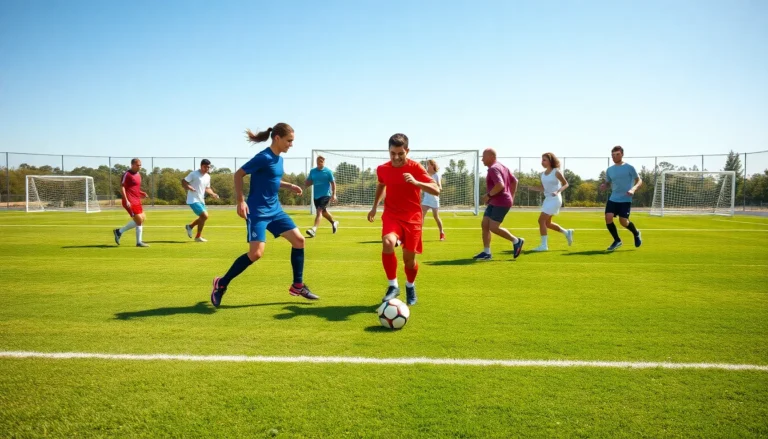
Soccer holds the title of the world’s most popular sport. Over four billion fans follow the game across every continent. From packed stadiums in Europe to street matches in South America, soccer connects people through a shared love of competition and teamwork.
This guide covers everything readers need to know about soccer. It explores the sport’s rich history, explains the basic rules, breaks down player positions, and highlights major competitions. Whether someone is new to the game or looking to deepen their understanding, this article delivers clear, practical information about the beautiful game.
Table of Contents
ToggleKey Takeaways
- Soccer is the world’s most popular sport, with over four billion fans following the game across every continent.
- Modern soccer originated in England in 1863 when the Football Association established the first official rules.
- A standard soccer match lasts 90 minutes with two teams of eleven players each, and the objective is to score more goals than the opponent.
- Soccer teams consist of four main position groups—goalkeeper, defenders, midfielders, and forwards—each serving a specific strategic purpose.
- Major soccer competitions like the FIFA World Cup and UEFA Champions League attract billions of viewers and showcase elite global talent.
- Playing soccer delivers significant health benefits, including improved cardiovascular fitness, muscle development, and mental wellness.
History and Origins of Soccer
Soccer traces its roots back thousands of years. Ancient civilizations in China, Greece, and Rome all played ball games that involved kicking. But, modern soccer took shape in England during the mid-1800s.
In 1863, the Football Association formed in London and established the first official rules. These rules separated soccer from rugby and created a standardized game. The sport spread quickly through British trade routes and colonial influence.
By the late 1800s, soccer had reached South America, Europe, and beyond. FIFA (Fédération Internationale de Football Association) formed in 1904 to govern international play. The first World Cup tournament took place in Uruguay in 1930, with 13 nations competing.
Soccer continued to grow throughout the 20th century. Professional leagues emerged in countries worldwide. Television broadcasting brought matches into millions of homes. Today, soccer generates over $25 billion annually and employs thousands of players, coaches, and staff across the globe.
Basic Rules and Gameplay
Soccer features two teams of eleven players each. The objective is simple: score more goals than the opponent. A goal counts when the ball completely crosses the goal line between the posts and under the crossbar.
Matches last 90 minutes, divided into two 45-minute halves. A referee controls the game and enforces rules. Two assistant referees watch the sidelines and flag offside violations.
Players cannot touch the ball with their hands or arms, except for the goalkeeper within their penalty area. This rule makes soccer unique among major sports. Violations result in free kicks or penalty kicks for the opposing team.
The offside rule prevents attackers from camping near the opponent’s goal. A player is offside if they’re closer to the goal than both the ball and the second-to-last defender when a teammate passes to them.
Yellow cards serve as warnings for fouls or unsporting behavior. Two yellow cards in one match equal a red card. A red card means immediate ejection from the game. The team must continue with fewer players.
Soccer requires minimal equipment: a ball, two goals, and a marked field. This simplicity explains why the sport thrives in wealthy nations and developing countries alike.
Key Positions and Player Roles
Soccer teams organize players into four main position groups: goalkeeper, defenders, midfielders, and forwards. Each role serves a specific purpose in the team’s strategy.
Goalkeeper
The goalkeeper protects the net and is the only player allowed to use their hands within the penalty area. Great goalkeepers combine quick reflexes, good positioning, and strong communication skills. They often direct the defense and start attacking plays with long kicks or throws.
Defenders
Defenders stop opposing attacks and protect the goalkeeper. Center-backs mark opposing strikers and clear dangerous balls. Full-backs cover the flanks and sometimes push forward to support attacks. Modern soccer demands that defenders also pass accurately and contribute to build-up play.
Midfielders
Midfielders link defense and attack. Defensive midfielders break up opponent plays and shield the back line. Central midfielders control possession and distribute the ball. Attacking midfielders create scoring chances through passes and dribbling. This position requires stamina since midfielders cover the most ground during matches.
Forwards
Forwards focus on scoring goals. Strikers position themselves near the opponent’s goal and convert chances. Wingers operate on the flanks, using speed and skill to beat defenders. Some teams use a single striker: others deploy two or three forwards depending on their tactical approach.
Successful soccer teams balance individual talent with collective understanding. Players must know their responsibilities while adapting to different game situations.
Major Soccer Competitions Around the World
Soccer features numerous prestigious competitions at both club and international levels. These tournaments capture global attention and showcase elite talent.
FIFA World Cup
The World Cup stands as soccer’s premier event. National teams compete every four years for the sport’s highest honor. The tournament attracts billions of viewers worldwide. Brazil has won five titles, more than any other nation. The 2022 World Cup in Qatar drew over 3.5 billion viewers across all platforms.
UEFA Champions League
Europe’s top club competition brings together the best teams from domestic leagues. The Champions League runs annually and features group stages followed by knockout rounds. Real Madrid holds the record with 15 titles. The final match regularly draws over 400 million television viewers.
Domestic Leagues
Top domestic leagues attract massive followings. The English Premier League generates the highest revenue and broadcasts to over 180 countries. Spain’s La Liga, Germany’s Bundesliga, Italy’s Serie A, and France’s Ligue 1 also feature world-class soccer. These leagues run from August through May each season.
Continental Championships
Continental tournaments pit national teams against regional rivals. The UEFA European Championship (Euros), Copa America, and Africa Cup of Nations rank among the most competitive. These events occur every four years and produce intense matches between historic rivals.
Soccer competitions provide entertainment for fans and career-defining moments for players. The sport’s global calendar ensures that meaningful matches happen year-round.
Health Benefits of Playing Soccer
Playing soccer delivers significant physical and mental health benefits. The sport provides a full-body workout while building social connections.
Cardiovascular Fitness
Soccer players run an average of 7 miles per match. This constant movement strengthens the heart and improves endurance. Regular play reduces the risk of heart disease, high blood pressure, and stroke. Studies show that recreational soccer provides similar cardiovascular benefits to running.
Muscle Development
The sport builds lower body strength through running, jumping, and kicking. Core muscles engage during balance and turning movements. Upper body strength develops through shielding the ball and physical challenges. Soccer creates lean muscle mass without requiring gym equipment.
Coordination and Agility
Dribbling, passing, and shooting demand precise motor control. Players develop better hand-eye coordination and spatial awareness. Quick direction changes improve agility and reaction time. These skills transfer to other physical activities and daily life.
Mental Health Benefits
Soccer releases endorphins that reduce stress and improve mood. Team participation builds friendships and combats social isolation. The strategic aspects of the game sharpen focus and decision-making abilities. Many players report that soccer helps manage anxiety and depression symptoms.
Weight Management
A 90-minute match burns between 500 and 1,000 calories depending on intensity. Regular play helps maintain healthy body weight. The interval nature of soccer, mixing sprints with recovery periods, proves effective for fat burning.
Soccer welcomes participants of all ages and skill levels. Recreational leagues, pickup games, and youth programs make the sport accessible to anyone interested in improving their fitness.